

Analysis of Process Characteristics of Cold Galvanized Square Tube: Electrochemical Corrosion Protection, Surface Treatment is Key
In the series of galvanized square tube products, there are significant differences in the process principle and anti-corrosion performance between cold galvanized square tube (also known as electroplated galvanized square tube) and hot-dip galvanized square tube. Cold galvanizing mainly relies on electrochemical principles to achieve anti-corrosion effects, and its process characteristics determine that it has extremely strict requirements for surface treatment of the substrate.
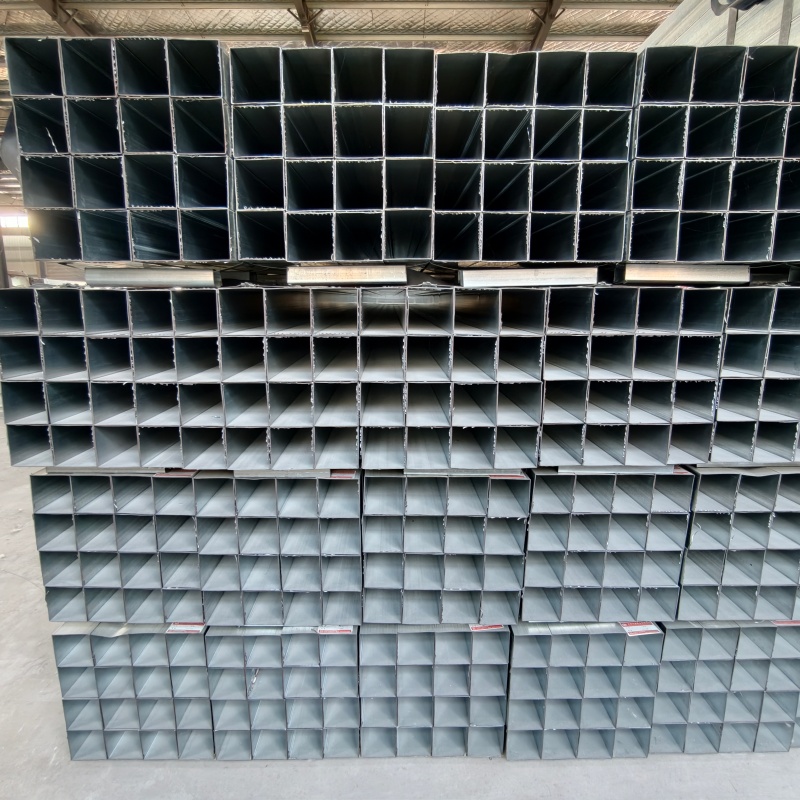
The production of cold dip galvanized square tubes usually uses hollow square tubes formed by cold bending and high-frequency welding as the base tube, followed by electroplating treatment: in the electrolyte, square tubes are used as cathodes and zinc plates are used as anodes, and zinc ions are deposited on the surface of the steel tube to form a galvanized layer through direct current. Unlike hot-dip galvanizing, cold dip galvanizing has a thinner layer (usually several micrometers to tens of micrometers) and no zinc iron alloy layer.
The anti-corrosion mechanism of cold-dip galvanized square tubes is mainly based on the electrochemical protection of sacrificial anodes: after the zinc powder comes into full contact with the steel substrate, an electrode potential difference is generated. When the corrosive medium invades, the zinc layer preferentially corrodes to protect the steel. Therefore, to ensure the effectiveness of the cold galvanized layer, it is necessary to ensure a tight bond between the zinc powder and the surface of the steel pipe, which places high demands on the pre-treatment of the steel pipe (oil removal, rust removal, surface roughness, etc.).

The main characteristics of cold galvanized square tube include:
The surface of the coating is smooth and has a good appearance, suitable for occasions that require painting or aesthetic requirements;
The production cost is relatively low, suitable for short-term or indoor use scenarios with low anti-corrosion requirements;
However, the coating is thinner and the corrosion resistance is much lower than that of hot-dip galvanized square tubes, making it unsuitable for long-term use outdoors or in humid environments.
Due to the limitations in thickness and durability of the cold galvanized layer, it is generally recommended in the industry to prioritize the use of hot-dip galvanized square tubes for outdoor structures, high humidity environments, or projects requiring long service life; Cold galvanized square tubes are more suitable for indoor frames, temporary facilities, or low corrosion environments.
In the series of galvanized square tube products, there are significant differences in the process principle and anti-corrosion performance between cold galvanized square tube (also known as electroplated galvanized square tube) and hot-dip galvanized square tube. Cold galvanizing mainly relies on electrochemical principles to achieve anti-corrosion effects, and its process characteristics determine that it has extremely strict requirements for surface treatment of the substrate.
The production of cold dip galvanized square tubes usually uses hollow square tubes formed by cold bending and high-frequency welding as the base tube, followed by electroplating treatment: in the electrolyte, square tubes are used as cathodes and zinc plates are used as anodes, and zinc ions are deposited on the surface of the steel tube to form a galvanized layer through direct current. Unlike hot-dip galvanizing, cold dip galvanizing has a thinner layer (usually several micrometers to tens of micrometers) and no zinc iron alloy layer.
The anti-corrosion mechanism of cold-dip galvanized square tubes is mainly based on the electrochemical protection of sacrificial anodes: after the zinc powder comes into full contact with the steel substrate, an electrode potential difference is generated. When the corrosive medium invades, the zinc layer preferentially corrodes to protect the steel. Therefore, to ensure the effectiveness of the cold galvanized layer, it is necessary to ensure a tight bond between the zinc powder and the surface of the steel pipe, which places high demands on the pre-treatment of the steel pipe (oil removal, rust removal, surface roughness, etc.).
The main characteristics of cold galvanized square tube include:
The surface of the coating is smooth and has a good appearance, suitable for occasions that require painting or aesthetic requirements;
The production cost is relatively low, suitable for short-term or indoor use scenarios with low anti-corrosion requirements;
However, the coating is thinner and the corrosion resistance is much lower than that of hot-dip galvanized square tubes, making it unsuitable for long-term use outdoors or in humid environments.
Due to the limitations in thickness and durability of the cold galvanized layer, it is generally recommended in the industry to prioritize the use of hot-dip galvanized square tubes for outdoor structures, high humidity environments, or projects requiring long service life; Cold galvanized square tubes are more suitable for indoor frames, temporary facilities, or low corrosion environments.